Infertility care starts with deciding when evaluation is warranted, then examining both partners before choosing treatment. You will finish with a practical picture of the consultation, investigations, surgical options, treatment steps, and questions to confirm before booking care.
Key takeaways
- Seek evaluation after 12 months under 35, six months at 35–39, or immediately at 40.
- Expect medical history, examination, and fertility planning during the first consultation.
- Initial tests assess ovulation, ovarian reserve, sperm health, and reproductive anatomy.
- Laparoscopy helps investigate suspected endometriosis, adhesions, or blocked fallopian tubes.
When should you seek an infertility evaluation?
Seek an infertility evaluation after 12 months of regular, unprotected intercourse if the woman is under 35. If she is 35 to 39, seek help after six months. At age 40, arrange an evaluation without waiting for either threshold.
Seek care sooner when any of these applies:
- Periods are irregular or absent, making ovulation unpredictable or absent.
- Endometriosis or fallopian-tube disease is suspected.
- You have had pelvic surgery, which can affect pelvic anatomy or cause adhesions.
- You have had recurrent pregnancy loss.
- The male partner has a known or suspected fertility concern, including a previous abnormal semen analysis.
Waiting is inappropriate when a clear risk factor already exists because the usual time limits assume no warning signs. Delay can postpone diagnosis of a treatable condition, reduce time for age-sensitive treatment choices, and leave a male-factor problem unidentified.
An early evaluation does not mean you must proceed to IVF. It usually begins with both partners’ medical histories and parallel assessment, including semen analysis for the male partner and tests guided by the woman’s cycle, symptoms, age, and surgical history.
You can seek advice even before trying for the full time period if you are worried about a recognised risk.
What happens during the first fertility consultation?
A fertility clinic consultation in Mumbai begins with a couple-based history, not an automatic IVF recommendation. The clinician records menstrual dates, cycle length, bleeding changes and ovulation patterns, then asks about pregnancy, miscarriage, ectopic pregnancy, time spent trying, previous contraception, and sexual timing and frequency.
The discussion also covers pelvic or testicular infections, operations, medical conditions, medicines and supplements, smoking, alcohol, weight, exercise, sleep, occupational exposures and other lifestyle factors. Both partners should attend because fertility involves two reproductive systems; at least one semen analysis is considered early, rather than treating infertility as solely a woman’s problem.
A result may lead to repeat testing or an andrology review.
Take these records to the appointment:
- Previous ultrasound and scan reports
- Operation notes or discharge summaries
- Earlier semen-analysis reports
- A complete medication and supplement list
- Recent menstrual dates and cycle details
- Details of earlier fertility treatment, including medicines, procedures and outcomes
Bring the actual reports, not only a verbal summary. This gives the clinician a clearer starting point, prevents duplicate testing and helps identify whether the next step involves ovulation assessment, further male-factor evaluation or another targeted investigation.
Which fertility tests come first, and what does each one show?
Testing usually starts with both partners, not with an ovarian-reserve panel. Semen analysis is an early investigation; collect the sample after 2–7 days without ejaculation. If the result is abnormal, repeat testing is usually arranged after about 2–3 months, with earlier review for a severe abnormality.
Female assessment then asks whether ovulation occurs and whether the reproductive organs look normal. Regular cycles suggest ovulation, while a progesterone blood test is often timed about seven days before the expected period. Test thyroid-stimulating hormone when symptoms, thyroid history, irregular cycles, or recurrent pregnancy loss indicate it.
| Investigation | What it shows | What it cannot prove |
|---|---|---|
| AMH, antral-follicle count, day-2-to-4 FSH | Expected ovarian response to stimulation | Whether natural conception will occur or infertility is present |
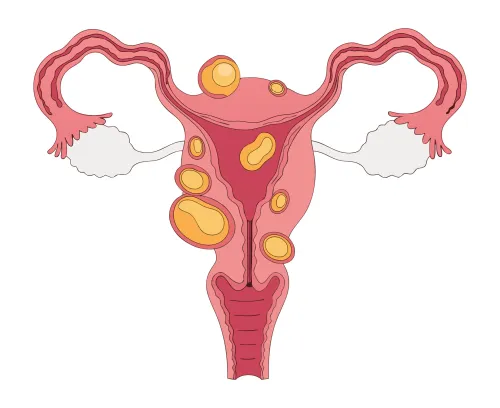
| Pelvic ultrasound | Uterine and ovarian anatomy, follicles, cysts, and fibroids | Whether the fallopian tubes are open |
| Hysterosalpingography or saline-infusion sonography | Whether each fallopian tube is open; HSG also outlines the uterine cavity | Egg quality or sperm function |
AMH is measured on any cycle day; FSH is usually drawn on cycle day 2–4. An early-cycle ultrasound can count antral follicles, while later scans can monitor follicle growth.
Tubal-patency testing is chosen according to history, examination, and local practice. Ultrasound examines anatomy and follicles; HSG or saline-infusion sonography answers the separate question of tubal openness. These tests do not replace semen analysis or ovulation assessment.
When is laparoscopy useful in infertility care?
Laparoscopy is useful when endometriosis, pelvic adhesions, or selected tubal problems are suspected and a direct look could change treatment. It is an operative procedure performed under anaesthesia, not a routine screening scan.
1. Start with less-invasive assessment. Pelvic ultrasound shows the uterus, ovaries, follicles, endometriomas, and some fibroids. Hysterosalpingography checks whether contrast passes through the fallopian tubes, while saline sonography outlines the uterine cavity. These tests usually require less recovery and no abdominal operation, but they cannot show the pelvis directly.
2. Consider laparoscopy when symptoms, examination findings, imaging, previous pelvic surgery, or treatment history point to disease that those tests cannot fully define. The surgeon can inspect endometriosis, scar tissue around the tubes or ovaries, and tubal damage; chromopertubation can assess whether dye passes through the tubes.
Treatment, such as removing endometriosis or adhesions, can sometimes occur during the same operation.
3. Weigh the cost of surgery. Laparoscopy involves anaesthesia, abdominal incisions, recovery time, bleeding, infection, organ injury, and adhesion formation. It is not automatically beneficial for every infertility diagnosis, so discuss the expected gain with an infertility doctor in Andheri West or your local specialist.
Laparoscopy is different from hysteroscopy: laparoscopy examines the outside of the uterus, tubes, ovaries, and pelvic cavity, while hysteroscopy passes a camera through the cervix to inspect and treat the uterine cavity.
What treatment options may follow the evaluation?
A stepwise plan may begin by correcting thyroid or other endocrine problems, then using timed intercourse when ovulation is predictable. If ovulation is absent or irregular, cause-specific ovulation-induction medicine with ultrasound monitoring may help; unmonitored stimulation raises multiple-pregnancy risk, while injectable gonadotropins can cause ovarian hyperstimulation syndrome.
Selected pelvic surgery may follow a diagnosis, not a routine schedule.
IUI and IVF are different treatments:
| Option | What happens | When it may apply |
|---|---|---|
| IUI | Prepared sperm is placed in the uterus around ovulation | Selected ovulation, sperm, or unexplained-fertility cases |
| IVF | Stimulation, monitoring, egg retrieval, laboratory fertilisation, embryo culture, and embryo transfer | When diagnosis, age, duration, or prior treatment supports it |
| ICSI | One sperm is injected into one egg during IVF | Selected sperm-related or previous-fertilisation problems; it is not automatic for every IVF cycle |
During a Dr Spenta infertility consultation, ask about:
- The medicine, injections, monitoring visits, risks, alternatives, and estimated total and add-on fees
- Cancellation rules, cycles with no transferable embryo, and the embryo-transfer strategy
- Whether IVF, ICSI, IUI, surgery, laboratory work, and referrals are on-site or arranged elsewhere
For what does infertility treatment include at Dr Spenta Clinic, confirm current details directly. Dr. SPENTA's GYNAEC CLINIC and Dr Spenta fertility care should be assessed by the explanation given, not a guaranteed success-rate claim or AMH alone.
Ask any infertility doctor in Andheri West to relate outcomes to age, diagnosis, ovarian response, sperm factors, and embryo development.
Related services
LAPAROSCOPY If you are unable to conceive within a reasonable period of time, seek help from your gynaecologist for evaluation and treatment of infertility. View service → |
GYNAECOLOGY Few decades ago, infertility was never spoken about much in public and was a private problem. View service → |
Frequently asked questions
When should you seek an infertility evaluation?
Seek help after 12 months of regular, unprotected intercourse if the woman is under 35. At ages 35–39, seek help after six months. At age 40, arrange an evaluation immediately.
What happens during the first fertility consultation?
The doctor reviews menstrual cycles, previous pregnancies, medical history, medications, sexual history, and prior test results. The consultation may also include an examination and a plan for tests for both partners.
Which fertility tests come first?
Early testing commonly includes ovulation assessment, ovarian-reserve testing, pelvic ultrasound, fallopian-tube evaluation, and semen analysis. Each test examines a different factor affecting conception.
When is laparoscopy useful in infertility care?
Laparoscopy is useful when symptoms or earlier tests suggest endometriosis, pelvic adhesions, blocked tubes, or another pelvic condition. It allows the surgeon to inspect the reproductive organs directly and treat selected problems during the procedure.
Keywords