Infertility testing does not begin with surgery for every couple, and laparoscopy cannot answer every fertility question. You will be able to judge when it adds useful information, understand what happens during the procedure, and compare the findings with options such as timed intercourse, IUI, further surgery or IVF.
Key takeaways
- Assess both partners before considering laparoscopy.
- Use laparoscopy to inspect the pelvis and test tubal patency directly.
- Ask how findings would change IVF, surgery, or expectant treatment.
- Discuss recovery, risks, fees, and alternatives at your consultation.
When is laparoscopy appropriate in an infertility work-up?
Laparoscopy is not usually the first infertility test. An infertility investigation doctor in Mumbai should assess both partners before recommending abdominal surgery, because a significant semen abnormality can change treatment and avoid an unnecessary operation.
1. Start with semen analysis, ovulation assessment, transvaginal ultrasound, and a detailed medical history. Check ovarian reserve with anti-Müllerian hormone (AMH) when age, menstrual history or treatment planning makes it relevant; order thyroid-stimulating hormone or prolactin when symptoms or cycle patterns indicate a hormonal cause.
2. Assess tubal patency first with hysterosalpingography (HSG) or contrast ultrasound. These tests avoid general anaesthesia and abdominal incisions, although an abnormal result may need clarification.
3. Consider laparoscopy when pelvic pain, suspected endometriosis, previous pelvic infection, ectopic pregnancy, pelvic surgery, abnormal ultrasound or HSG findings, repeated failed treatment, or another pelvic operation already points towards direct inspection.
4. Do not make it the first choice for isolated male-factor infertility, uncomplicated ovulatory dysfunction, or a case in which non-invasive testing already provides enough information. Age, time trying to conceive, ovarian reserve, semen results, and the plan for natural conception, IUI or IVF must shape the decision.
Tubal blockage after sterilisation is a different question from unexplained infertility and needs separate counselling about reconstruction versus IVF. Ectopic-pregnancy symptoms, including one-sided pain, fainting or heavy bleeding, require urgent medical care—not elective laparoscopy infertility investigation in Mumbai.
What can laparoscopy reveal that scans and HSG cannot?
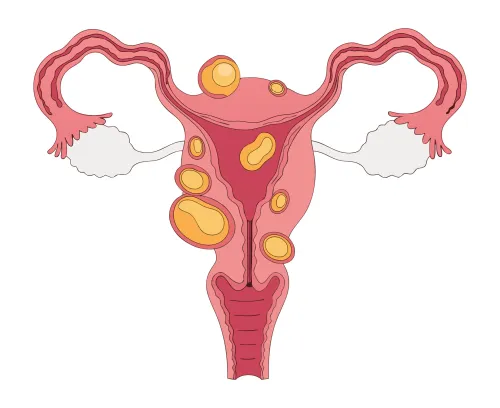
Laparoscopy can reveal disease on the outside of the uterus, fallopian tubes and ovaries, plus the pelvic peritoneum, that imaging may miss. It can identify endometriosis, adhesions, hydrosalpinx, fimbrial damage, distorted pelvic anatomy and subtle tubal or ovarian abnormalities.
| Test | What it shows | What it cannot show |
|---|---|---|
| Transvaginal ultrasound | Uterus, ovaries, cysts and some endometriosis-related changes | Many superficial lesions, adhesions and the full external pelvic anatomy |
| HSG | The outline of the uterine cavity and whether contrast passes through the tubes | Endometriosis, adhesions outside the uterus, fimbrial damage and the tube’s external condition |
| Saline sonography | The inside of the uterine cavity, including some polyps or fibroids | Disease on the uterine surface or throughout the surrounding pelvis |
| Hysteroscopy | The inside of the uterine cavity | The outer uterus, tubes, ovaries and pelvic peritoneum |
| Laparoscopy | Direct pelvic inspection and dye testing of each tube | Sperm function, ovulation quality, egg quality and ovarian reserve |
During chromopertubation, dye passes through the cervix and uterus while the surgeon watches for dye exiting each tube. Dye passage proves patency, not normal ciliary movement, tubal transport or guaranteed natural conception.
Diagnostic laparoscopy only investigates. Operative laparoscopy uses instruments through additional ports to divide adhesions, treat endometriosis, remove a cyst or address selected tubal disease during the same anaesthetic when treatment is safe and appropriate.
A laparoscopy for blocked tubes in Mumbai may combine both purposes, while fertility laparoscopy in Mumbai remains a selected investigation rather than a test for every cause of infertility.
How do the findings change fertility treatment?
The operative finding should change the next treatment, not automatically trigger more surgery. Open tubes support timed intercourse or IUI when ovulation, semen results and age make those options reasonable, but they do not guarantee pregnancy.
| Finding | Treatment discussion | Important limit |
|---|---|---|
| Open tubes and healthy pelvic anatomy | Timed intercourse or IUI | Sperm dysfunction, ovulatory problems and egg-quality decline can still prevent pregnancy |
| One blocked tube | Natural conception or IUI | The other tube, fimbriae and surrounding anatomy must be healthy |
| Both tubes blocked | Confirm location and severity before tubal cannulation, repair or IVF | Severe distal damage has poorer fertility prospects |
| Fimbrial damage, extensive adhesions or hydrosalpinx | Repair in selected cases; salpingectomy or tubal occlusion before IVF for clinically significant hydrosalpinx | Natural fertility can remain low after surgery, and hydrosalpinx fluid can reduce IVF success |
| Minimal or mild endometriosis | Treatment may help selected patients | Surgery is not automatically beneficial at every stage; delay, cost and risk matter |
| Endometrioma | Observe or operate according to pain, suspicious features, size, follicle access and treatment plan | Removing ovarian tissue can lower ovarian reserve, reflected by reduced AMH in some patients |
Laparoscopy for blocked tubes in Mumbai may combine diagnosis with adhesiolysis or selected repair, but surgery after sterilisation requires a separate assessment from unexplained infertility; IVF may suit some couples better than reconstruction. A normal pelvis still cannot rule out sperm dysfunction, ovulatory problems, embryo problems, declining egg competence or microscopic tubal dysfunction.
Fertility laparoscopy in Mumbai is therefore one decision point, not a complete infertility test.
What should you expect before, during and after the operation?
Laparoscopy takes place under general anaesthesia through small abdominal incisions. Carbon dioxide creates working space so a camera can inspect the pelvis; additional ports allow dye testing, biopsy or planned treatment.
Before the operation:
- Confirm the required pregnancy test, fasting time and medication instructions. Ask whether to pause anticoagulants or adjust diabetes medicines; do not change either without instructions.
- Tell the team about allergies, contraception, previous anaesthetic problems, and every medicine, vitamin or supplement you take.
- Arrange transport home after anaesthesia and an accompanying adult. Confirm whether you need day surgery or an overnight stay.
Afterward, expect incision discomfort, abdominal bloating and shoulder-tip pain caused by residual gas. Ask when you can drive, return to work, have intercourse and resume fertility treatment; the operating surgeon must provide those timings.
Discuss bleeding, infection, anaesthetic complications, blood clots, injury to the bowel, bladder, ureter, blood vessels or reproductive organs, port-site problems and adhesions. Treatment may be stopped if completing it would be unsafe.
Contact the surgical team urgently for fever, worsening pain, heavy bleeding, fainting, breathlessness, persistent vomiting, wound redness or discharge. Don’t drive while affected by anaesthetic medicines or prescription pain relief.
What should you ask at a fertility surgery consultation in Mumbai?
Bring prior operation notes, ultrasound and HSG reports, semen analyses, your medication list, menstrual and pregnancy history, and records of ectopic pregnancy or pelvic infection. An infertility investigation doctor in Mumbai should assess both partners; a significant male-factor result can change the plan and avoid unnecessary surgery.
Ask these questions at a fertility surgery consultation in Mumbai:
- Is the procedure diagnostic only, or will you seek consent for adhesiolysis, endometriosis treatment, salpingectomy, ovarian surgery or other treatment?
- Which findings would change management, and what alternatives exist, including observation, repeat non-invasive testing, IUI and IVF?
- Will any biopsy or removed tissue be sent for histopathology?
- How long could surgery, recovery or treatment delay conception?
- What are the surgeon’s relevant laparoscopic training and experience, the anaesthetist-review process, facility accreditation, emergency access, complication policy and follow-up arrangements?
- Will one team coordinate assessment and treatment for both partners?
- Can you provide a written, itemised estimate covering the surgeon, anaesthesia, theatre, pathology, medicines and follow-up?
| Option | What it means | When it applies |
|---|---|---|
| Observation or non-invasive testing | No abdominal operation | Results already guide care or surgery adds little |
| Laparoscopy | Direct inspection, with possible treatment | Symptoms, abnormal imaging or suspected pelvic disease |
| IUI or IVF | Assisted conception | Tubal, sperm, age or ovarian factors make surgery less useful |
“Best doctor” is promotional, not a clinical ranking. Consider Dr. SPENTA's GYNAEC CLINIC alongside other Mumbai providers using these objective questions. The goal is a reasoned choice, not surgery simply because it is available.
Related services
LAPAROSCOPY If you are unable to conceive within a reasonable period of time, seek help from your gynaecologist for evaluation and treatment of infertility. View service → |
GYNAECOLOGY Few decades ago, infertility was never spoken about much in public and was a private problem. View service → |
Frequently asked questions
When is laparoscopy appropriate in an infertility work-up?
Laparoscopy is considered after assessment of both partners, especially when symptoms, scans, HSG findings, suspected endometriosis, adhesions, or tubal disease require direct inspection.
What can laparoscopy reveal that scans and HSG cannot?
It can show endometriosis, pelvic adhesions, ovarian or uterine surface abnormalities, and the condition of the tubes and pelvis directly. Dye testing during the operation can assess whether the tubes are open.
How do laparoscopic findings change fertility treatment?
Findings can support treatment for endometriosis or adhesions, indicate tubal surgery, or show that IVF is a more suitable option than further corrective surgery.
What should you expect before, during and after the operation?
Expect pre-operative assessment and anaesthesia planning, a keyhole procedure under general anaesthesia, and a recovery discussion covering pain, wound care, activity limits, warning signs, and follow-up.
What should you ask at a fertility surgery consultation in Mumbai?
Ask why surgery is recommended, what alternatives exist, whether dye testing is planned, what treatment could follow each finding, and the expected recovery, risks, and total fees.
Keywords